

MUSEUM QUALITY TABLE CLOCK (‘ALTARUHR’) Jeremiah Pfaff, Augsburg Ca. 1640 Germany
M&R200a
MUSEUM QUALITY TABLE CLOCK (‘ALTARUHR’)
Signed: Jeremiah Pfaff, Augsburg
Circa 1640
Germany
Movement
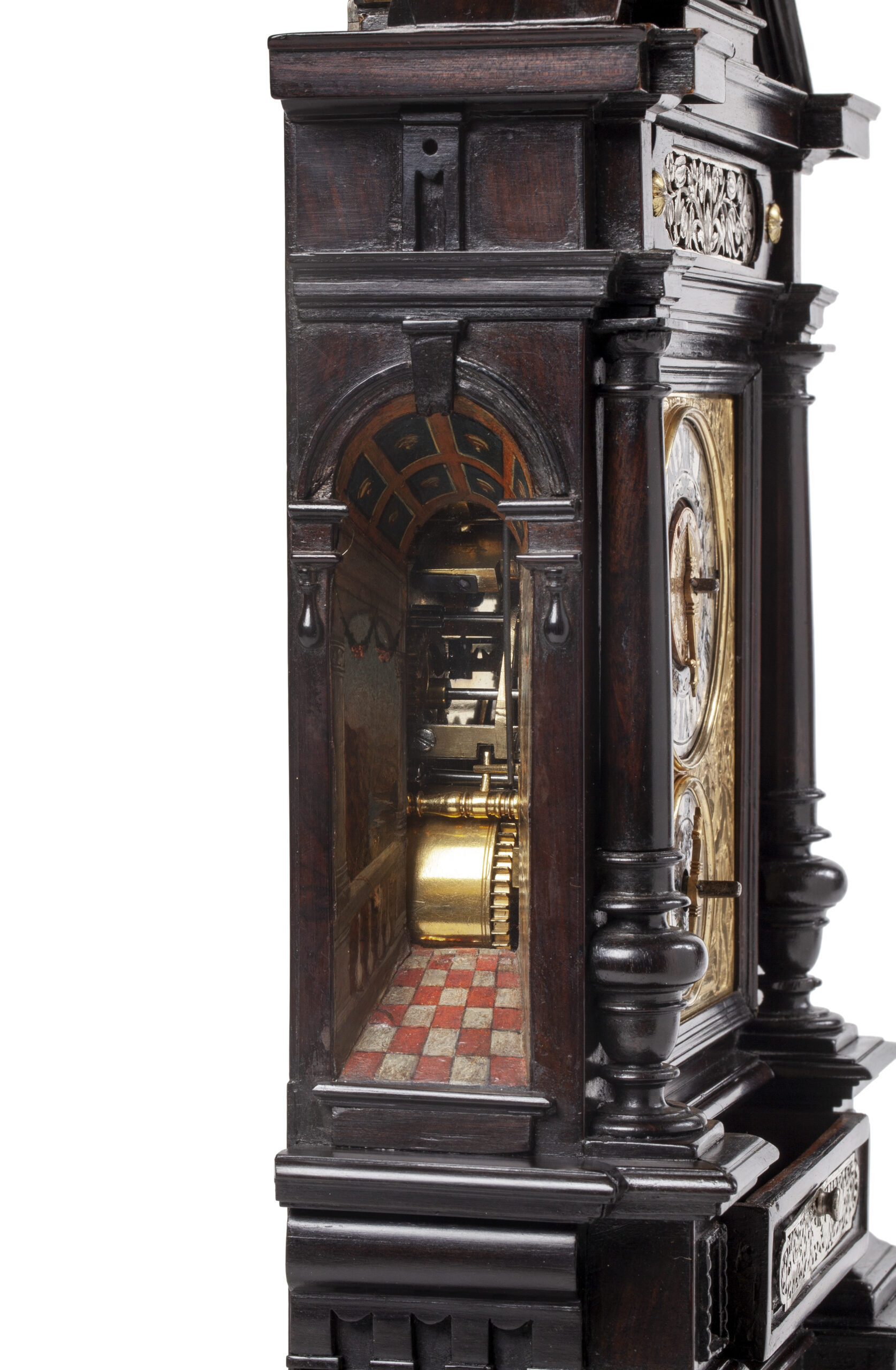
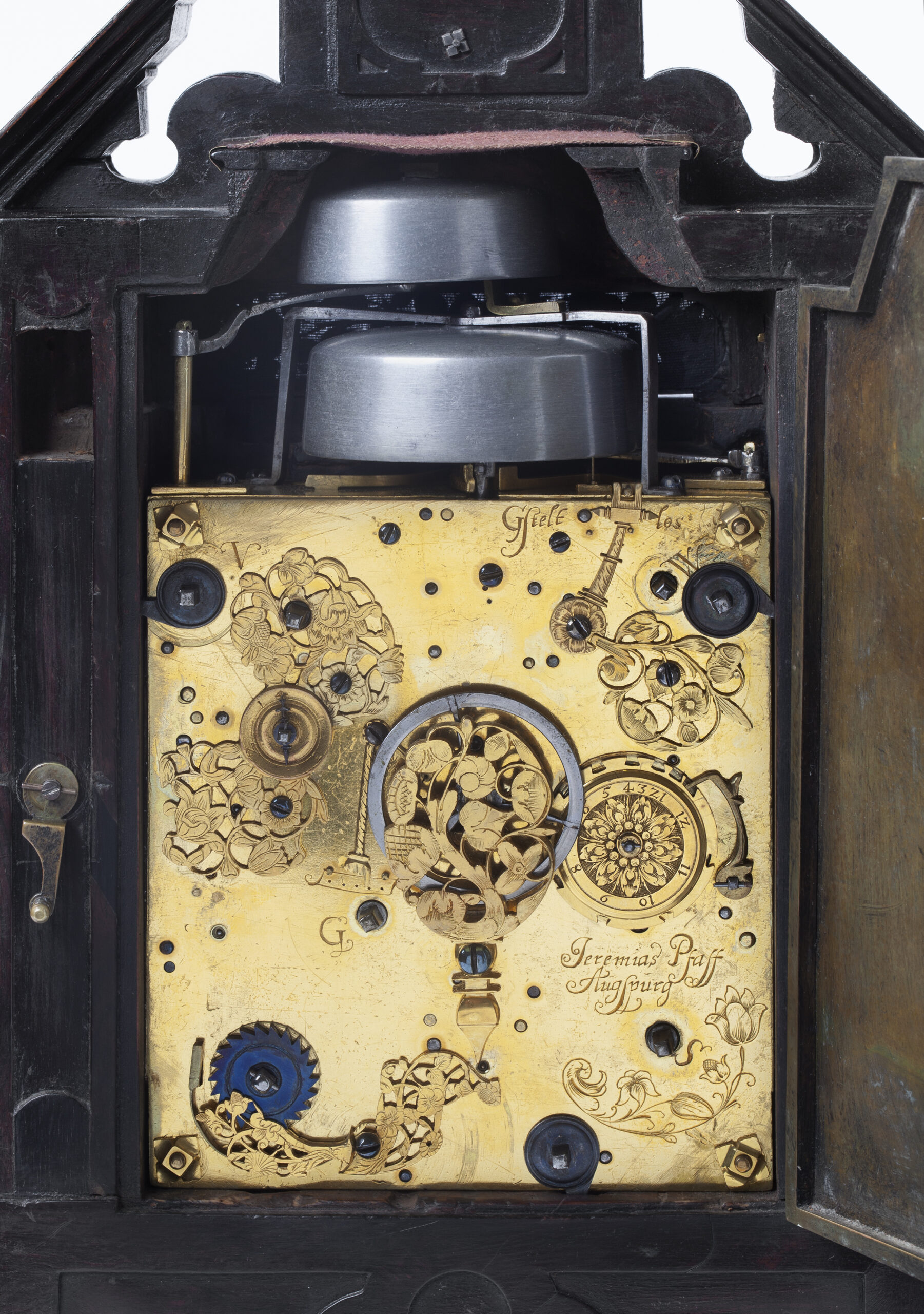
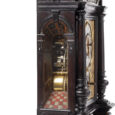
The spring-driven fire-gilt brass plated movement consists of a going and quarter striking trains. The going train has a spring barrel with chain fusee and a verge escapement with vertically adjustable iron balance. The striking train, regulated by count wheels, indicate the hours in full and the quarters on two bells differing in pitch. It also has an alarm. The backplate shows a pierced balance cock, the regulation and marking of the striking trains and the alarm switch, with which the alarm can be blocked or released. The maker has signed the movement on the backplate as follows: Jeremias Pfaff, Augspurg. The movement is wound at the back, with the squares marked by an engraved G (Gehwerk – going train), V (Viertel – quarters), S (Slagwerk –striking) and W (Wecker – alarm). The two superimposed bells surmount the movement, the larger for the hours and the smaller for the quarters. The movement is protected by a brass door.
Dial
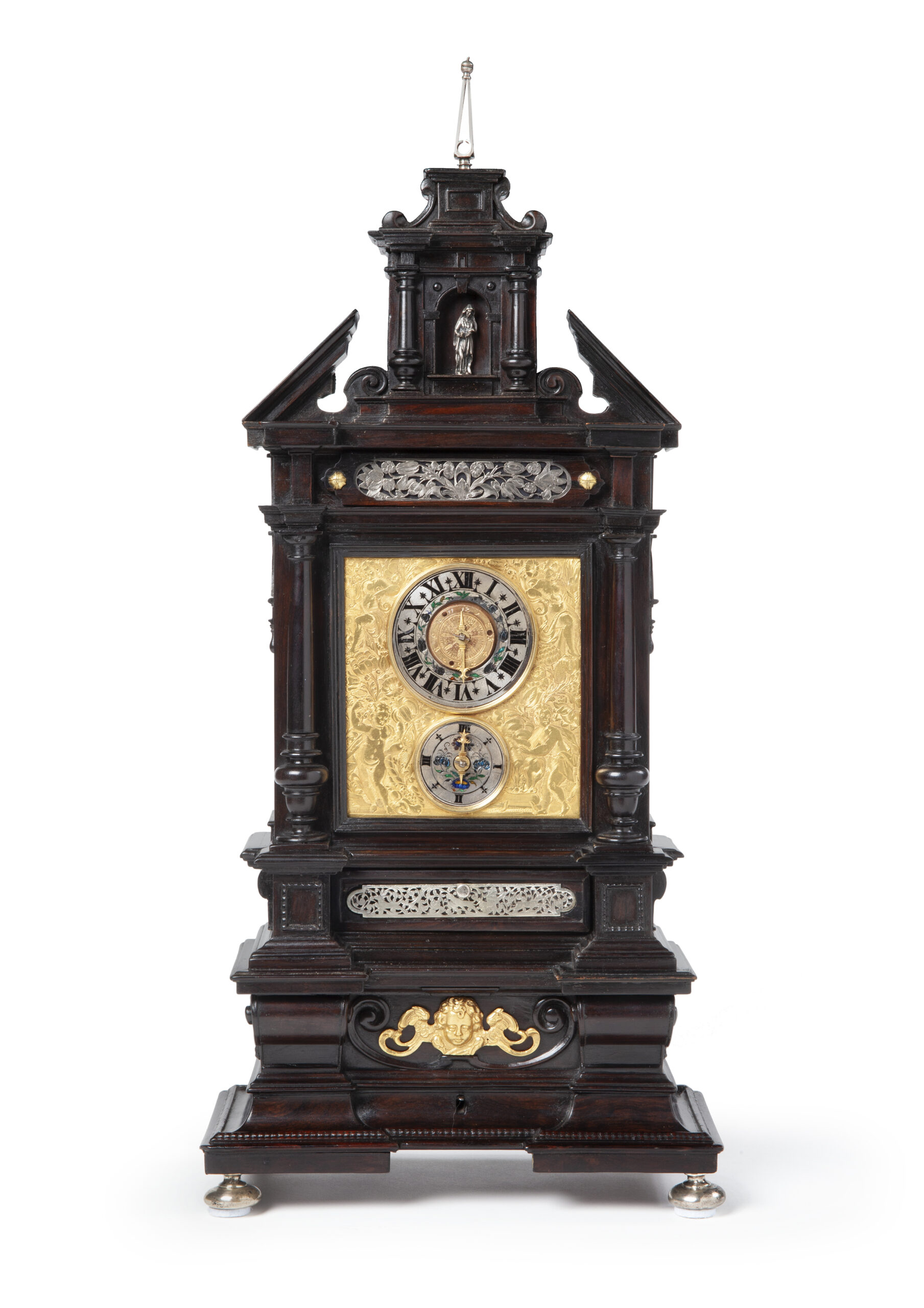
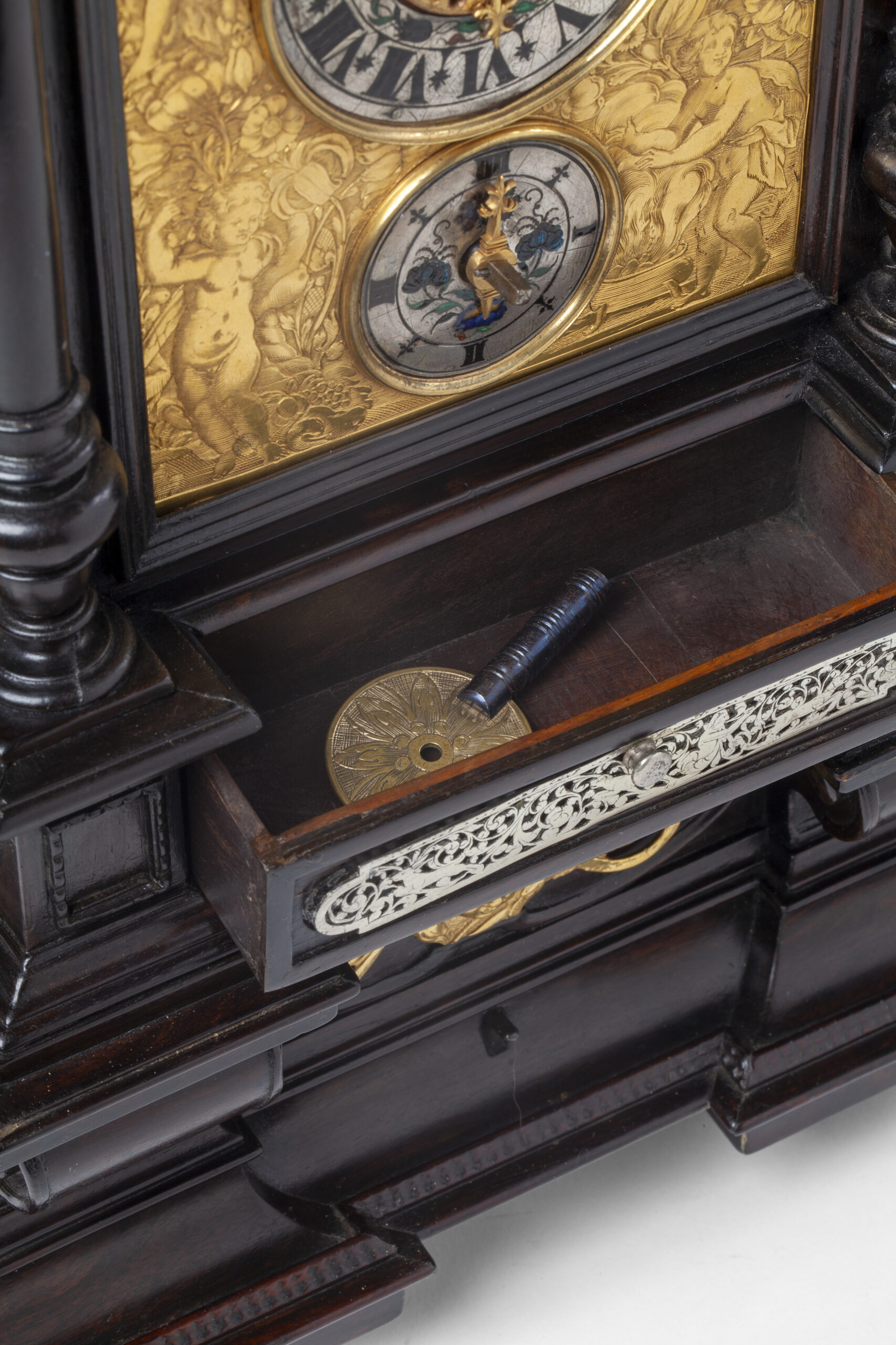
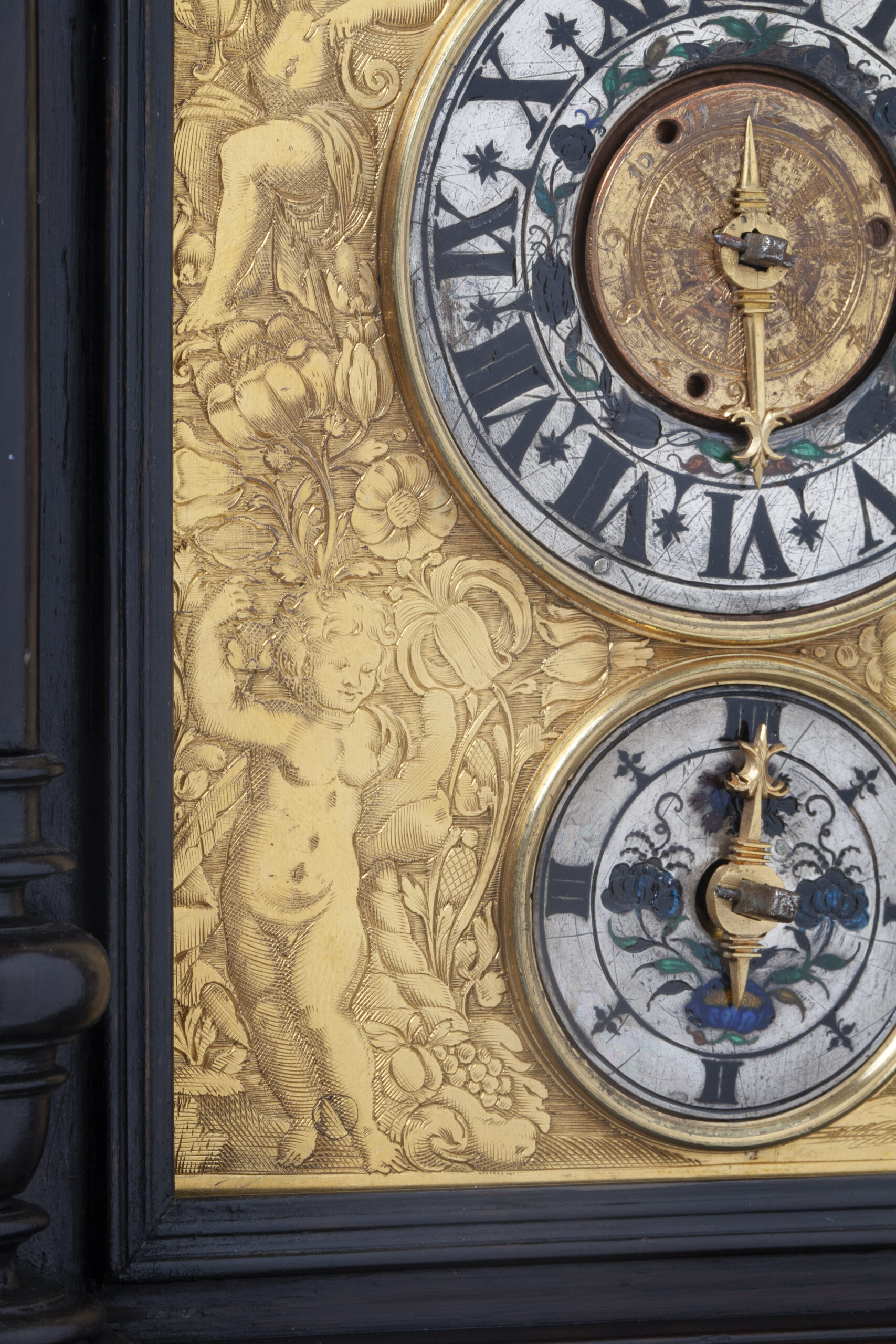
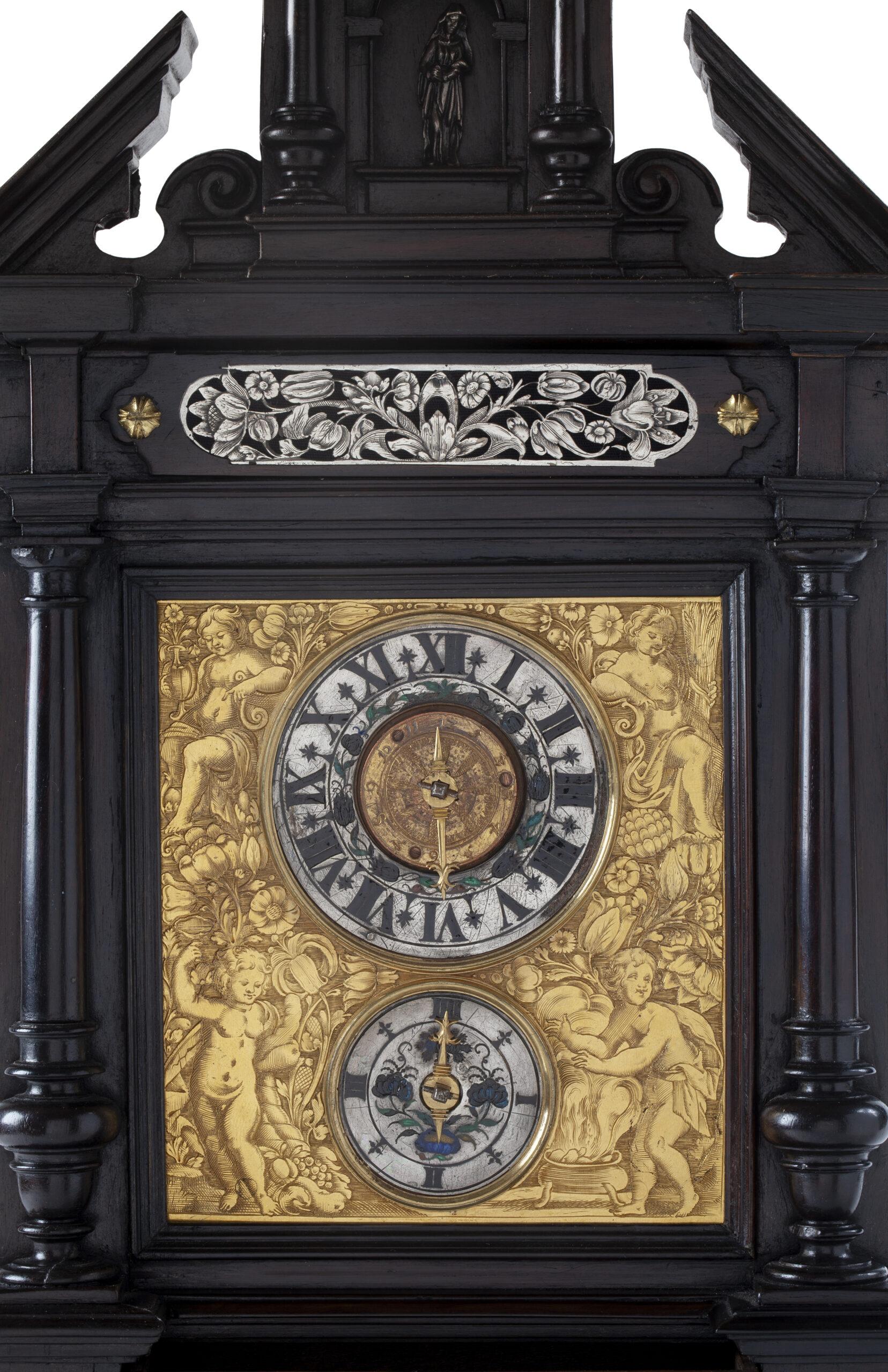
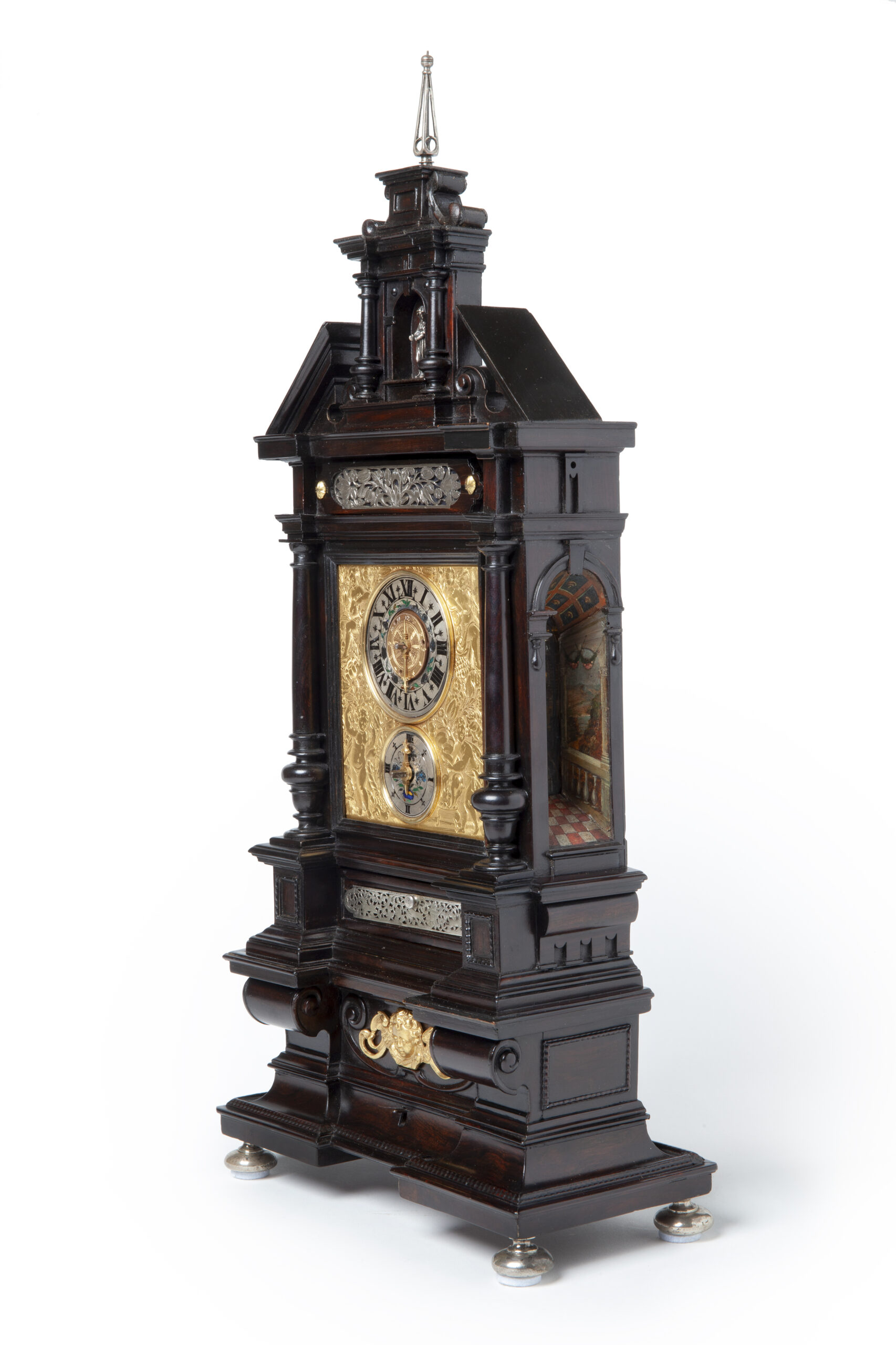
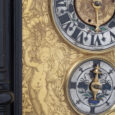
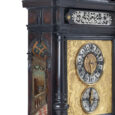
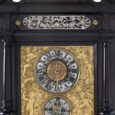
The rectangular, fire-gilt and engraved brass dial has a large silver chapter ring with Roman numerals and half-hour markers, surrounded by a ring of coloured inlaid enamels in flower and leaf motifs. The gilt brass alarm disc in the middle has Arabic hour numerals. At the bottom is a small silver chapter ring with Roman numerals I-IV for the quarters. The time is indicated by a sawn-out fire-gilt brass hand for each chapter ring. The remaining part of the dial is embellished by very beautiful engravings with allegorical figures in the corners representing the four seasons.
Case
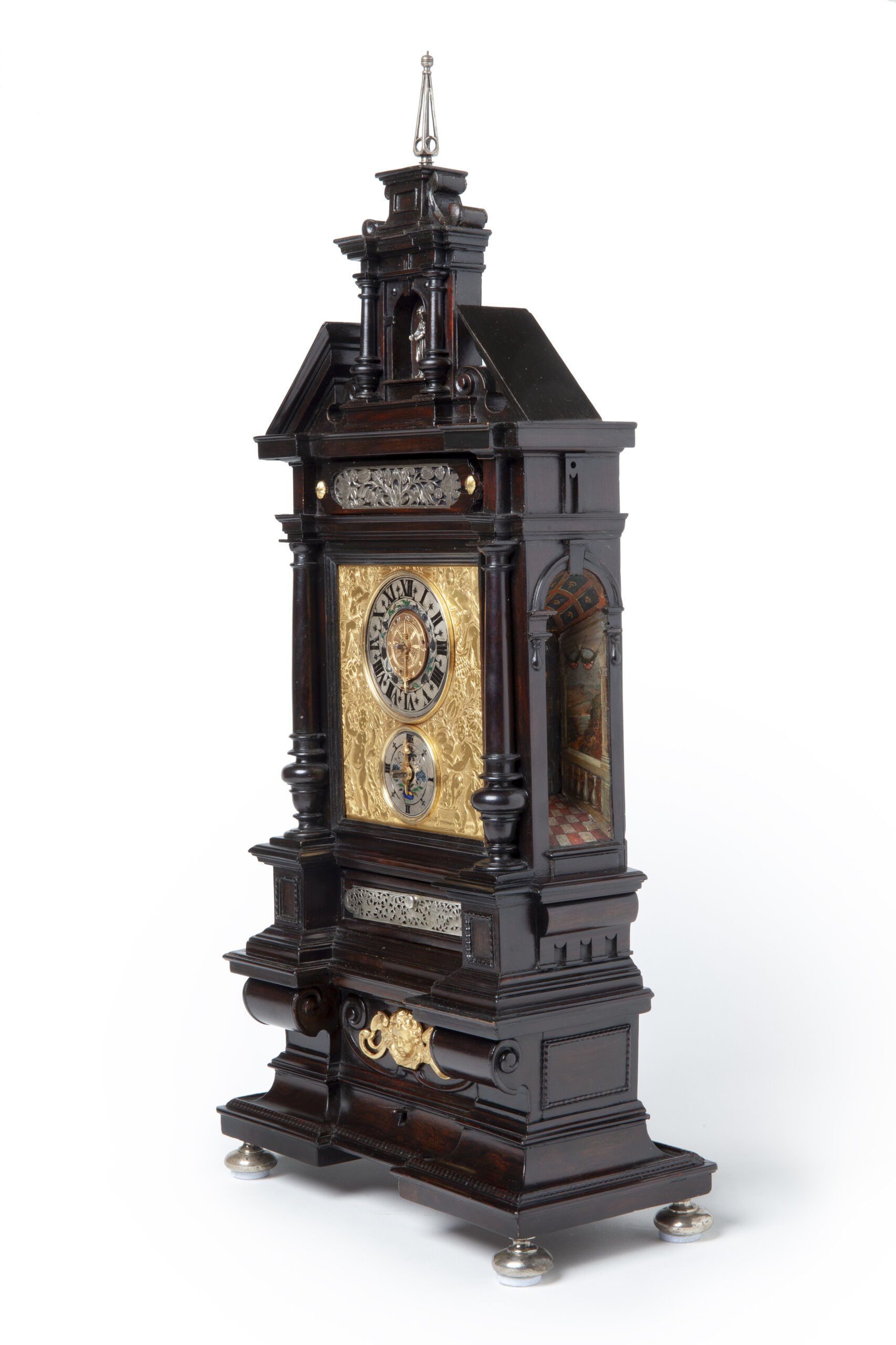
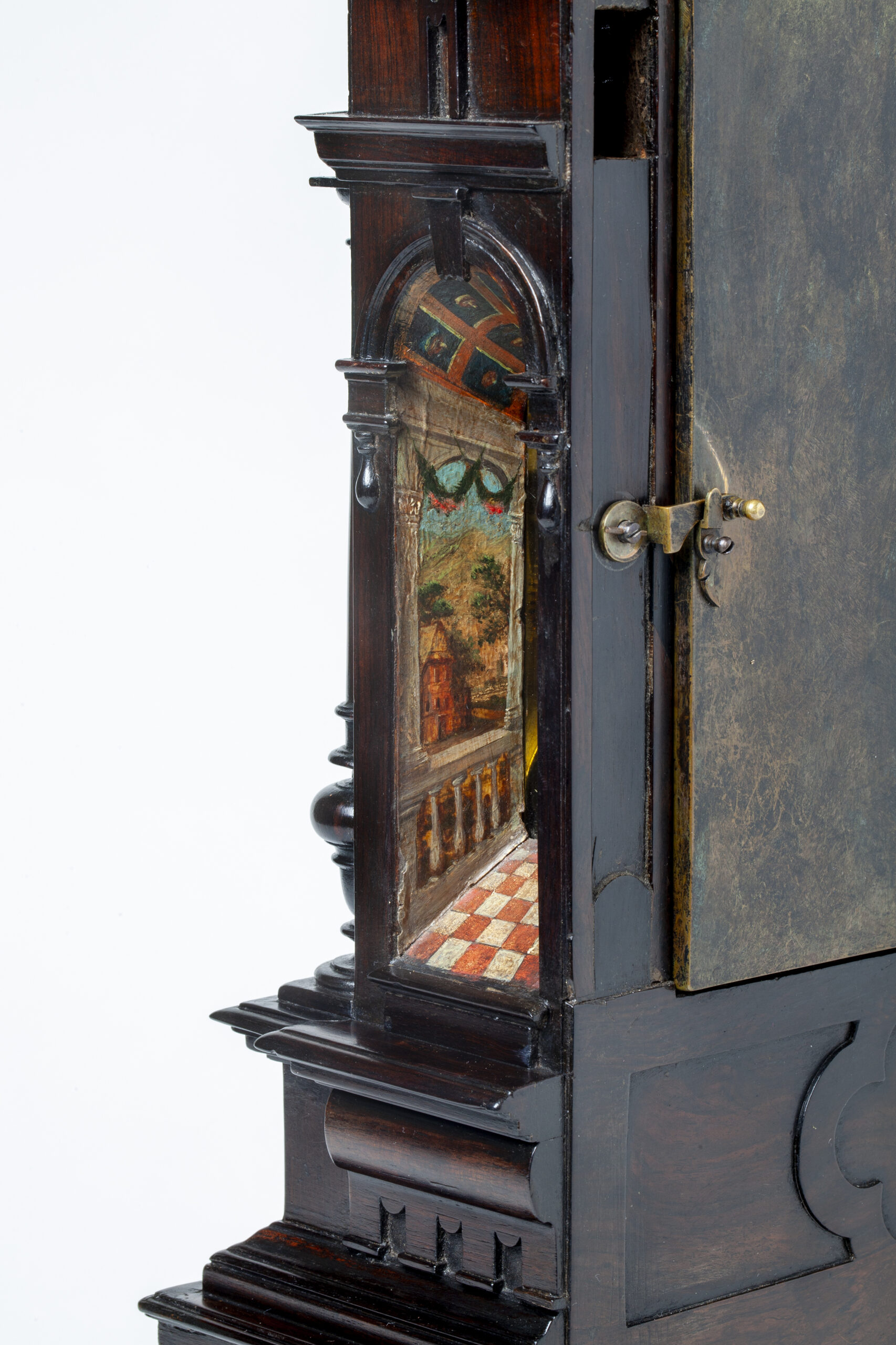
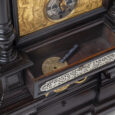
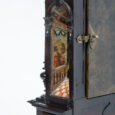
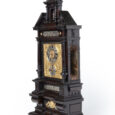
The ebony case is very finely constructed in the shape of an altar and is decorated with openwork silver ornaments and a gilt brass winged cherub head. There are columns on either side of the dial, while under the dial there is a small drawer with an openwork silver ornament on the front, in which the winding key is stored. The sides of the case are open and painted with a representation of two balustrades with a view and garlands (trompe l’oeils). The case is surmounted by an open tympanum representing a small chapel with a silver Madonna, which is decorated with a silver obelisk finial at the top. There are three openings on the back with which this clock can be attached to the wall. The case is stamped on the back (EBEN) and the hallmark of Augsburg (a pineapple). The case rests on four silver raised bun feet.
Duration: 24 hours.
Height: 51.5 cm.
Width: 23 cm.
Depth: 11 cm.
Literature
-J. Abeler, Meister der Uhrmacherkunst, p. 426.
-Similar clocks are depicted in, Klaus Maurice, Fig. 670 and 672.
The maker
Jeremias Pfaff I was born in 1618 and worked independently as a clockmaker in Augsburg from 1639. He was a remarkable clockmaker active in the 17th century. His work is recognized for its craftsmanship and complexity. This clock is an example of this. He died in the year 1677. Several clocks by his hand are in important museum collections as the Victoria and Albert Museum a the Kunsthistorisches museum in Vienna.