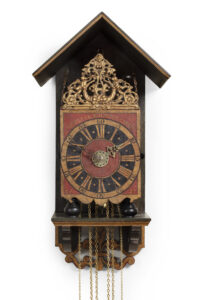



AMSTERDAM WALL CLOCK Signed: J.n Breukelaar Amsterdam Circa 1765 Holland
M&R148
AMSTERDAM WALL CLOCK
Signed: J.n Breukelaar Amsterdam
Circa 1765
Holland
Movement
The weight-driven, day-going movement consists of going and striking trains. The going train has anchor escapement with pendulum, whilst the Dutch hour striking is controlled by a rack and snail system and sounds the hours and half hours fully on two bells differing in pitch. The striking can be repeated. In addition, the clock has a weight-driven alarm. The alarm time is set with the tail of the hour hand on the Arabic alarm disc.
Dial
The arched brass dial has a silvered brass chapter ring with Roman hour numerals, half-hour, quarter-hour, Arabic five-minute and minute divisions. The clock is signed by the maker on the chapter ring J.n Breukelaar Amsterdam. The date is indicated above the VI in the matted and engraved center of the dial. Behind the pierced blued-steel hands is a silvered Arabic alarm disc. There are four gilt-brass spandrels in the corners depicting the four seasons. The silvered arch displays the moon phase and the moon date. Typical Dutch scenes are engraved in the arch and the center of the dial.
Case
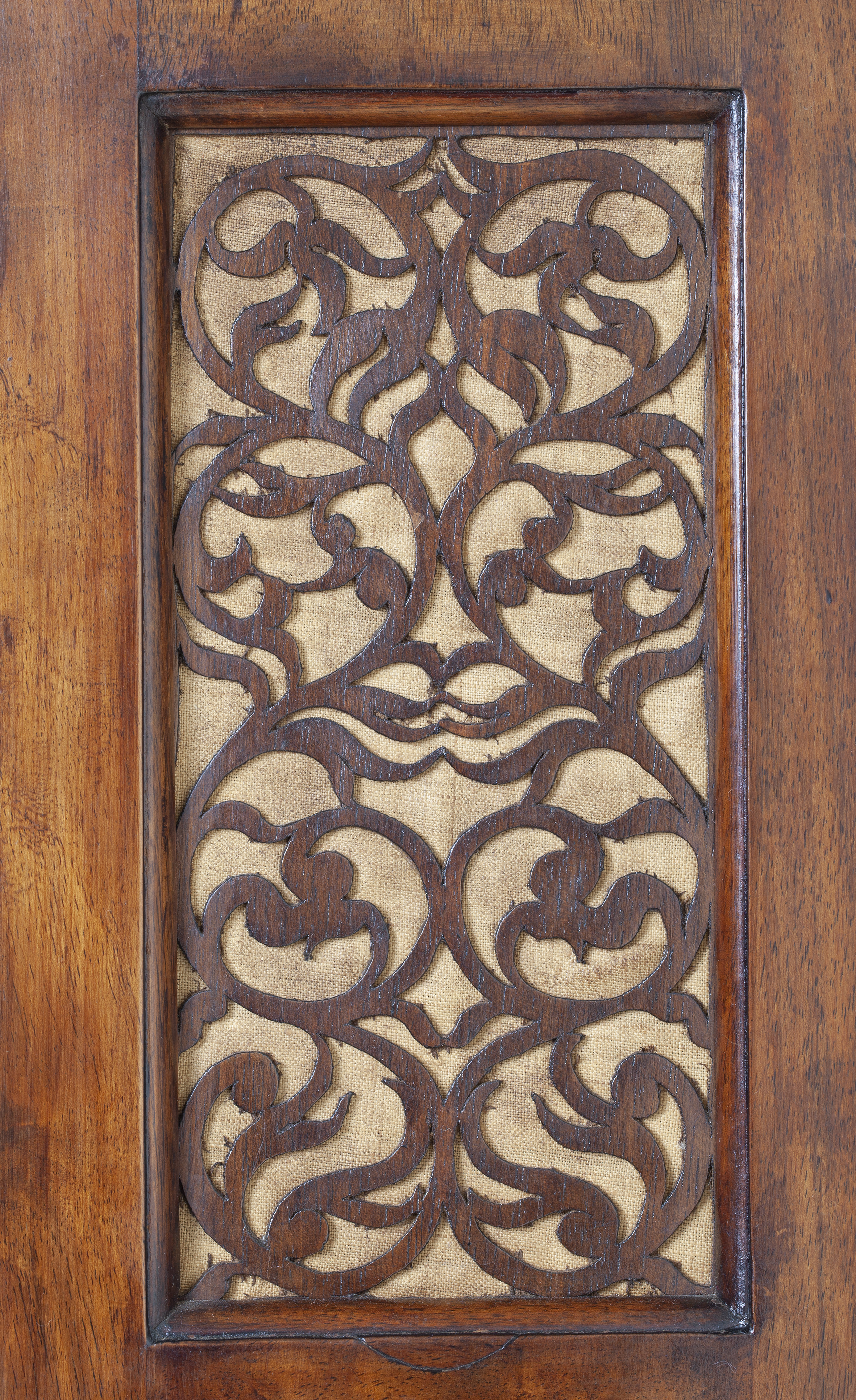
The burl-walnut and walnut-veneered oak case, a so-called Amsterdammertje has an arched hood, which has pierced wooden panels to the sides and is surmounted by three gold-leaf covered statuettes on bases: an Atlas figure and two trumpet blowing angels. There is an circular lenticle with a wooden surround in the slide, through which the movement of the pendulum is visible.
Duration 24 hours
Height 137 cm
Width 34 cm
Depth 21 cm
Literature
Enrico Morpurgo, Nederlandse klokken- en horlogemakers vanaf 1300, p. 19
The maker
Jan Breukelaar was born in 1738 and married in 1767. He was a citizen of Amsterdam in 1761. On February 20, 1768, he took over Antony van Oostrum’s business and shop on Grote Kattenburgerstraat. He was a signatory to the watchmaker’s hallmark in 1790.