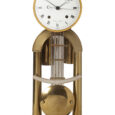
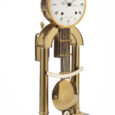
SKELETON CLOCK Sarton à Liège Ca. 1800 Belgium
M&R94
SKELETON CLOCK
Signed: Sarton à Liège
Circa 1800
Belgium
Movement
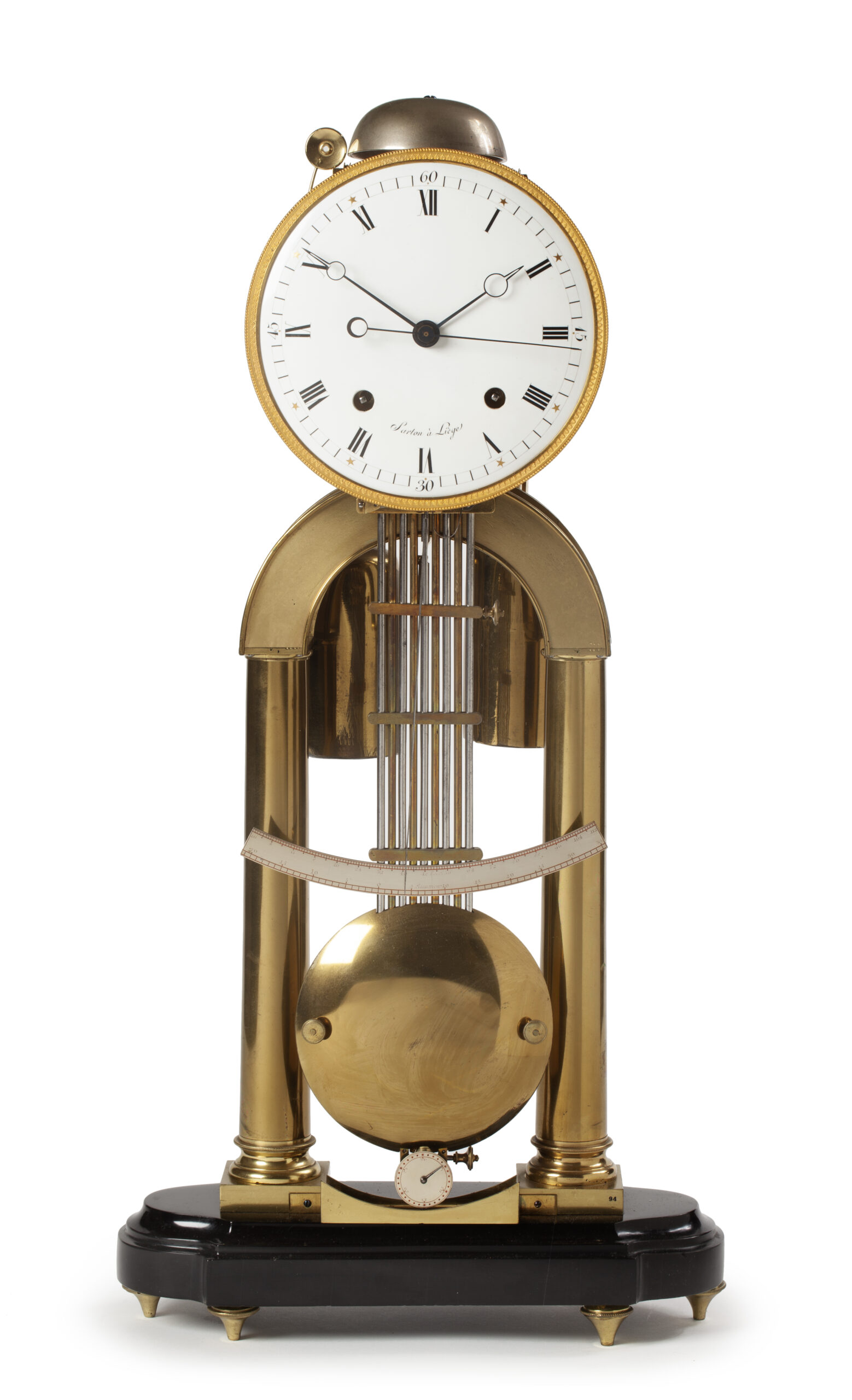
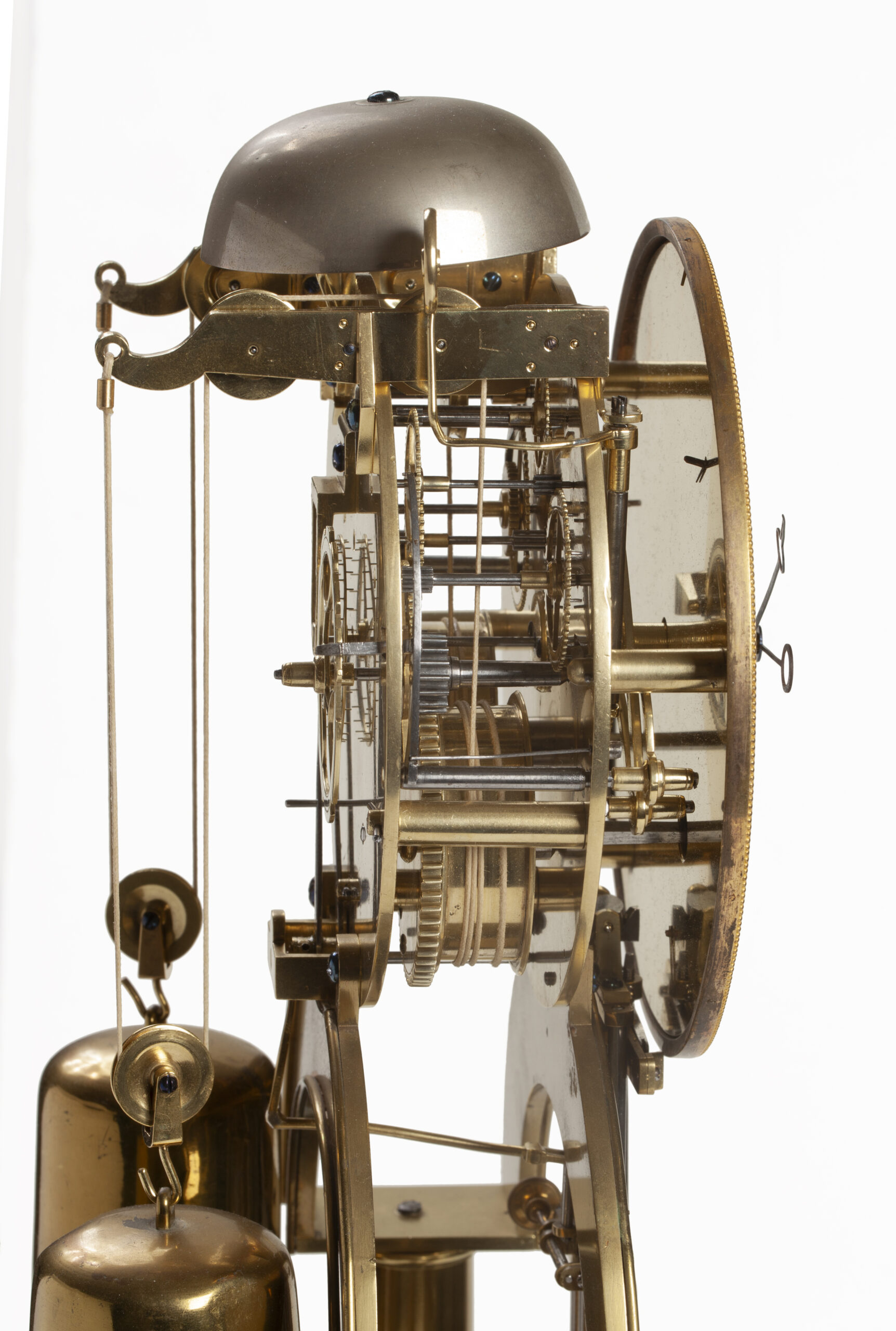
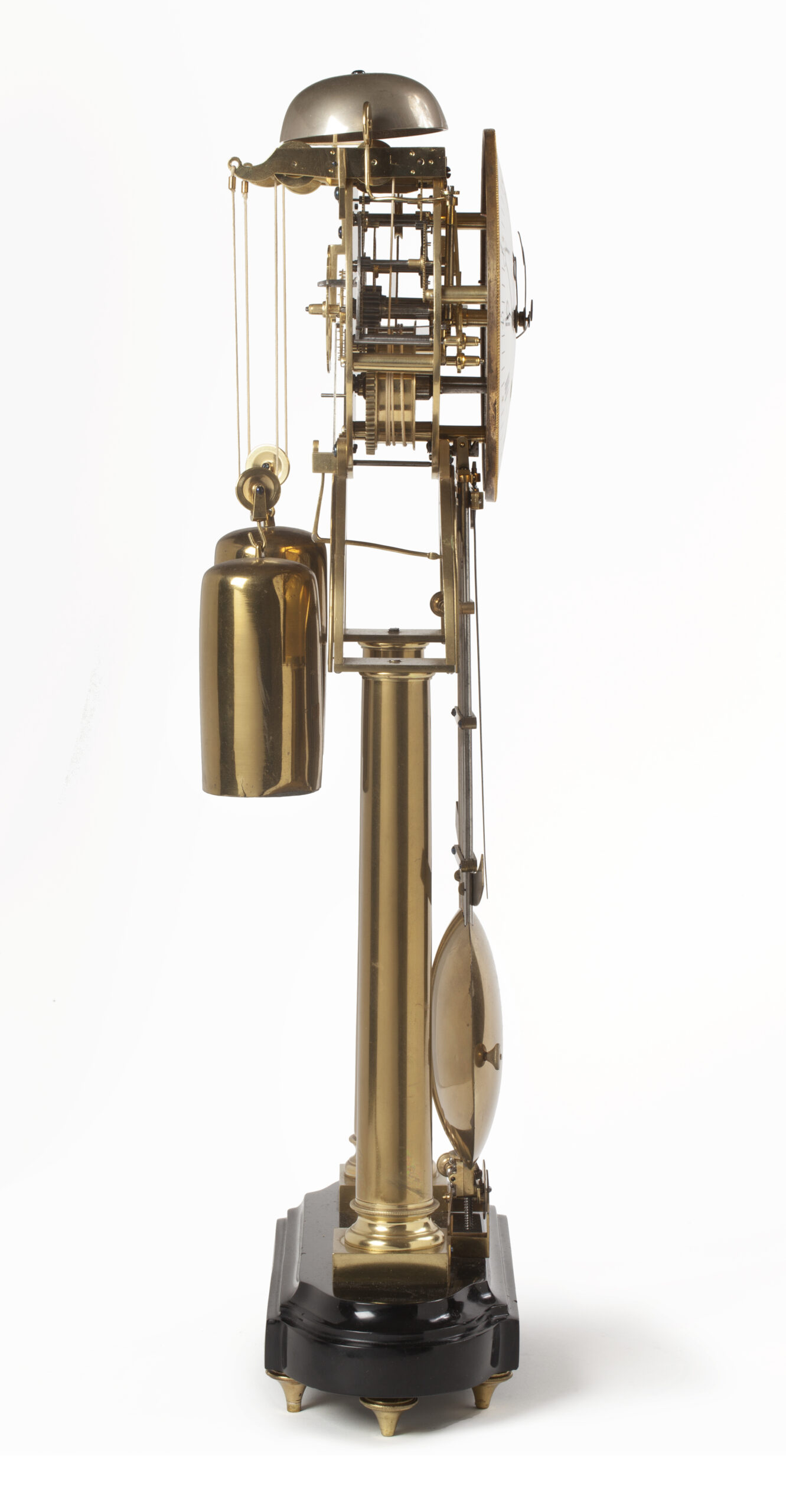
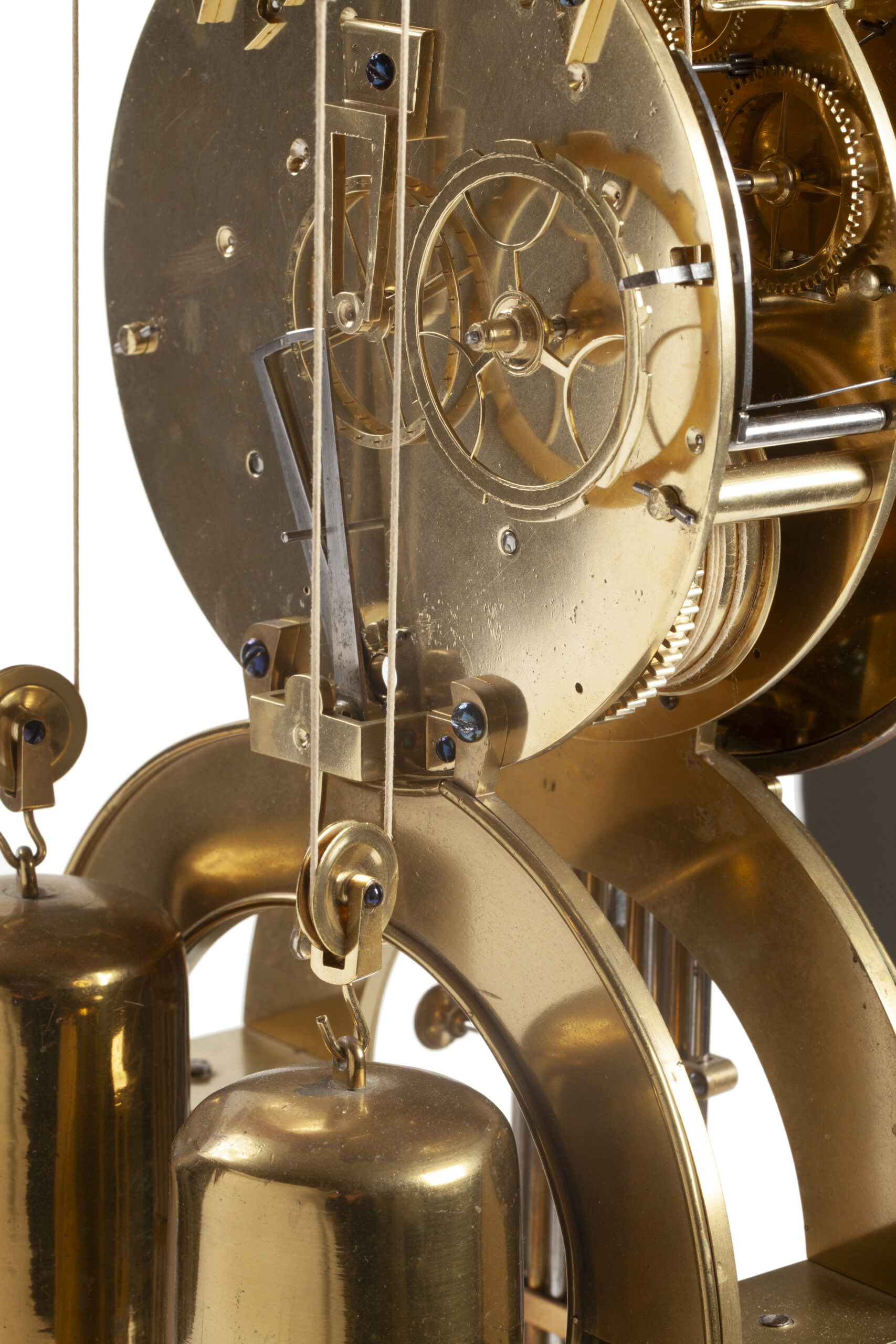
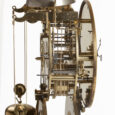
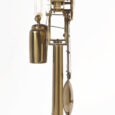
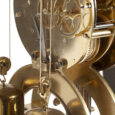
The weight-driven brass movement is constructed between circular plates and consists of going and striking trains. The going train has a pin-wheel escapement with compensation pendulum. The striking mechanism is controlled by a countwheel and indicates the hours fully and the half hours with one stroke on a bell.
Dial
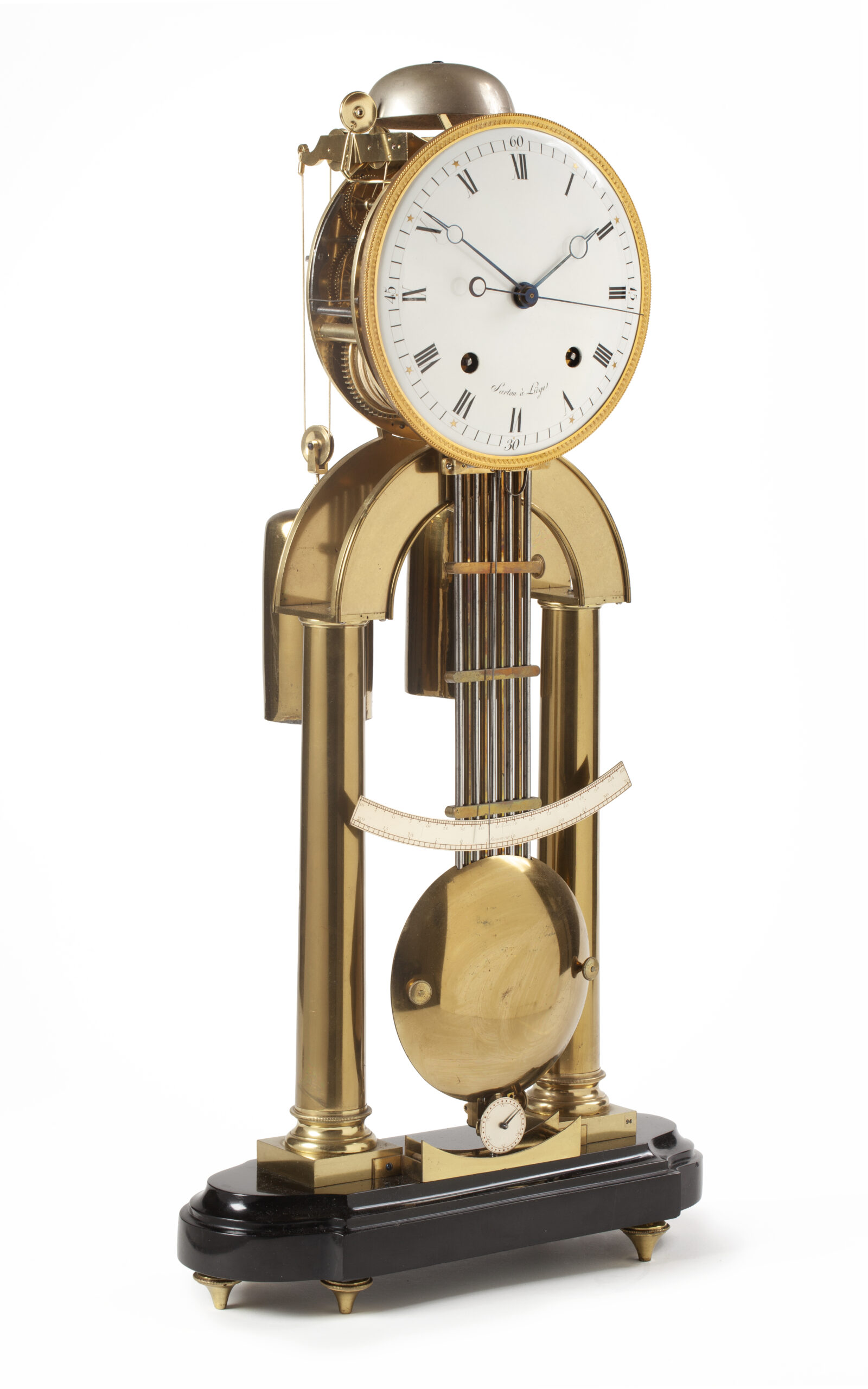
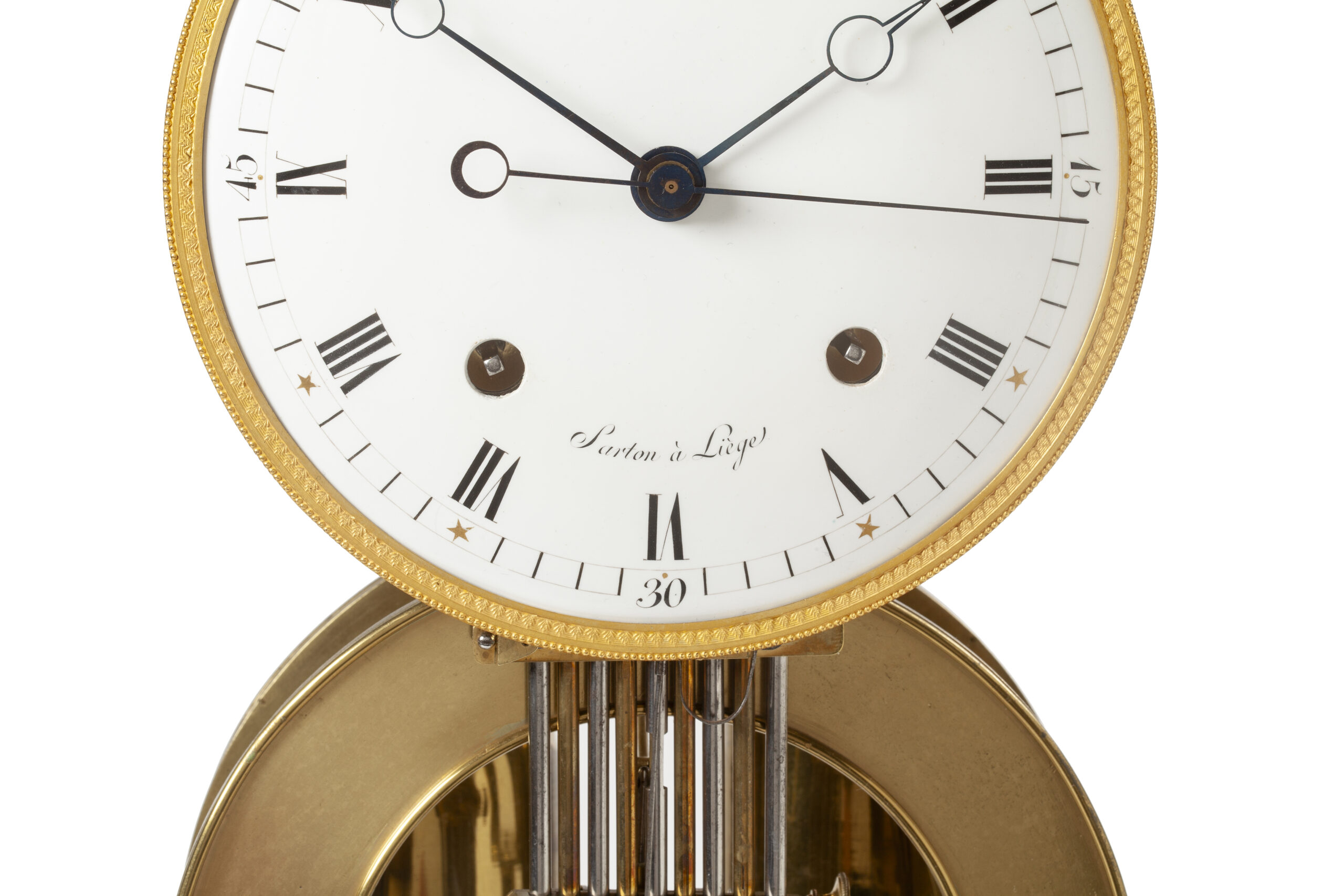
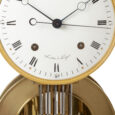
The circular white enamel dial has a black Roman chapter ring with Arabic numerals for the quarter hours, gold-coloured stars as five-minute markers and strokes for the remaining minutes. The dial is set in a round engine-turned brass bezel. The winding holes are situated between the IIII and the IV and between the VII and the VIII. The time is indicated by two stylized blued steel Breguet hands. The central blued steel seconds hand is counter balanced. The dial is signed by the maker in the following manner: Sarton à Liège.
Case
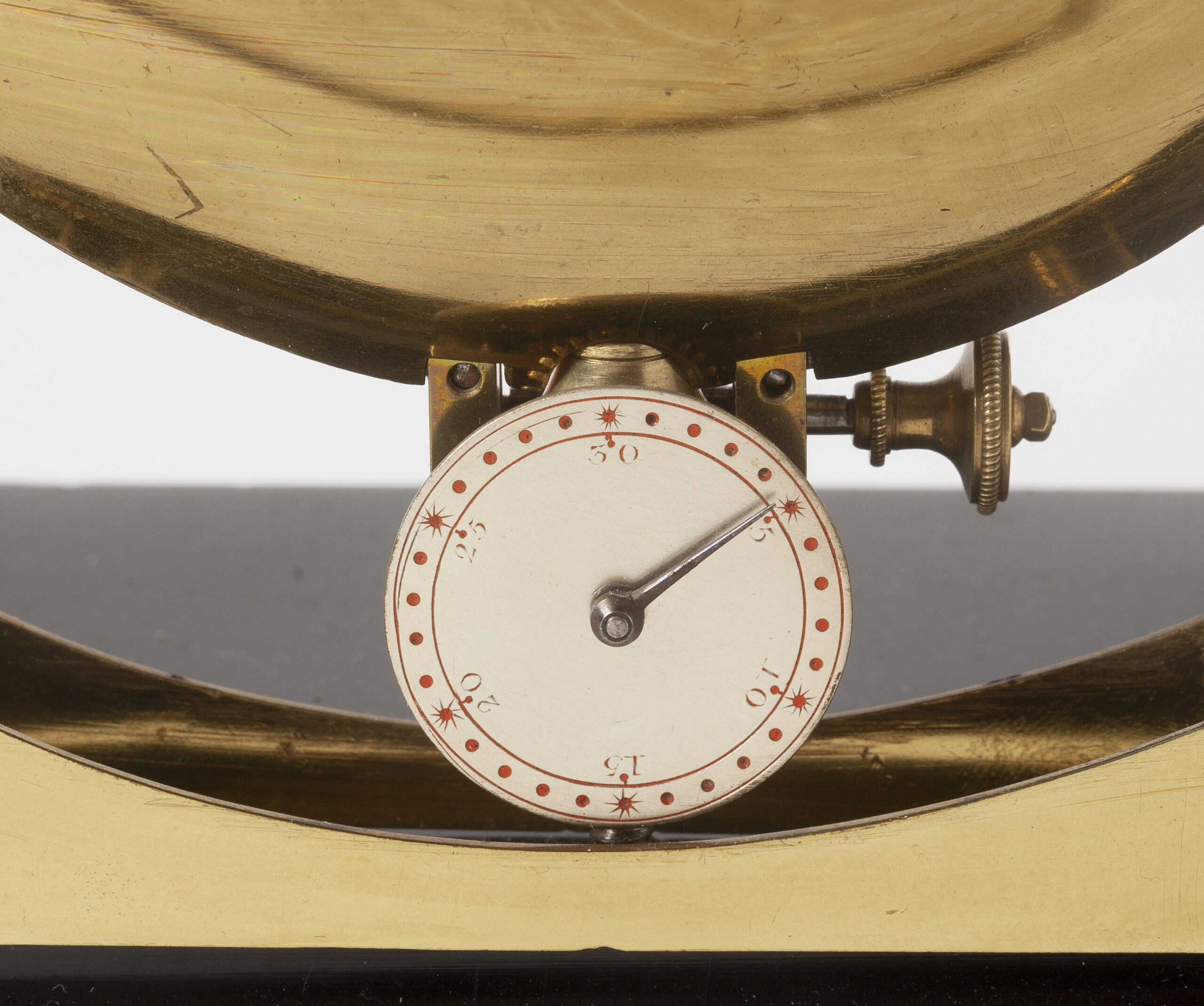
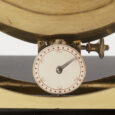
The brass skeleton is situated on a black marble base. An arc-shaped plate is mounted on the pendulum above the pendulum bob and a thin blue steel pointer indicates the temperature in the Fahrenheit and Réaumur scales to indicate whether the pendulum is compensating for heat or cold. There is a small dial for the adjustment under the pendulum bob.
Duration: 1 week
Height: 56 cm.
Width: 27 cm.
Depth: 11 cm.
Literature:
– Tardy, Dictionnaire des Horlogers Français, p. 586.
– D. Roberts, Continental and American Skeleton Clocks, p. 175.
The maker
Hubert Sarton was born in Paris in 1748. Around 1772 he became an apprentice to the very important and skilled clockmaker Julien Le Roy. It can be assumed that several clocks bearing Leroy’s name passed through the capable hands of the young Hubert Sarton. He moved to Liège where he became particularly known for his skeleton regulators. In 1782 he published a book about making different types of clocks. He is one of the most prolific clockmakers of the 18th and the beginning of the 19th centuries, and a notable mechanical designer. The years 1775 to 1810 were probably his most productive period. He died in Liège on October 28, 1828, at the age of almost 80.