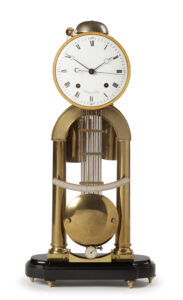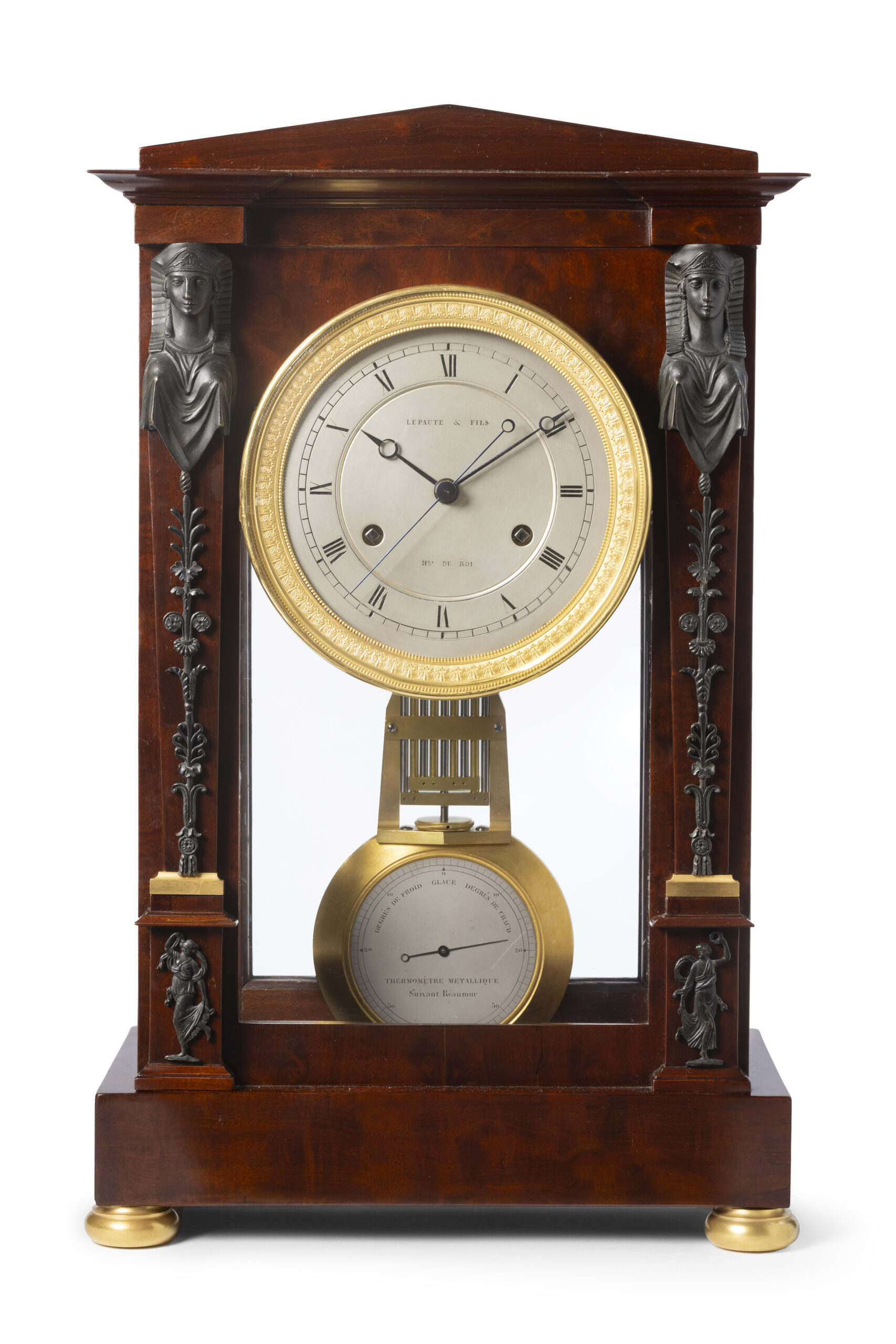
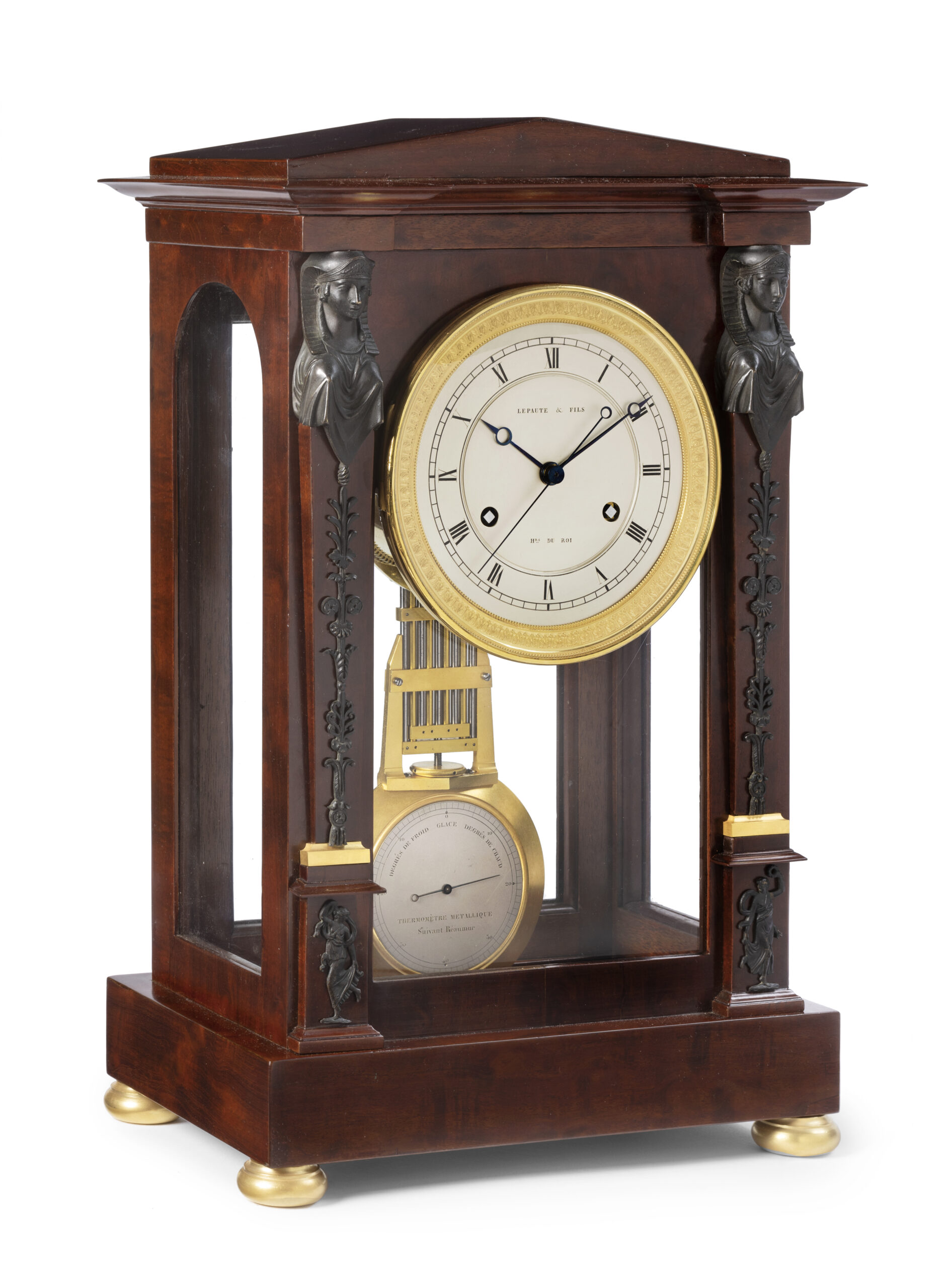
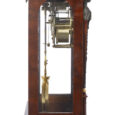
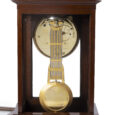
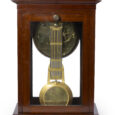
TABLE REGULATOR ‘RETOUR D’EGYPT’: LEPAUTE & FILS, Hger du Roi, 9281 2/12 France
M&R66
TABLE REGULATOR ‘RETOUR D’EGYPT’
Signed and numbered: LEPAUTE & FILS, Hger du Roi, 9281
Dated: 2/12 (1812)
France
Movement
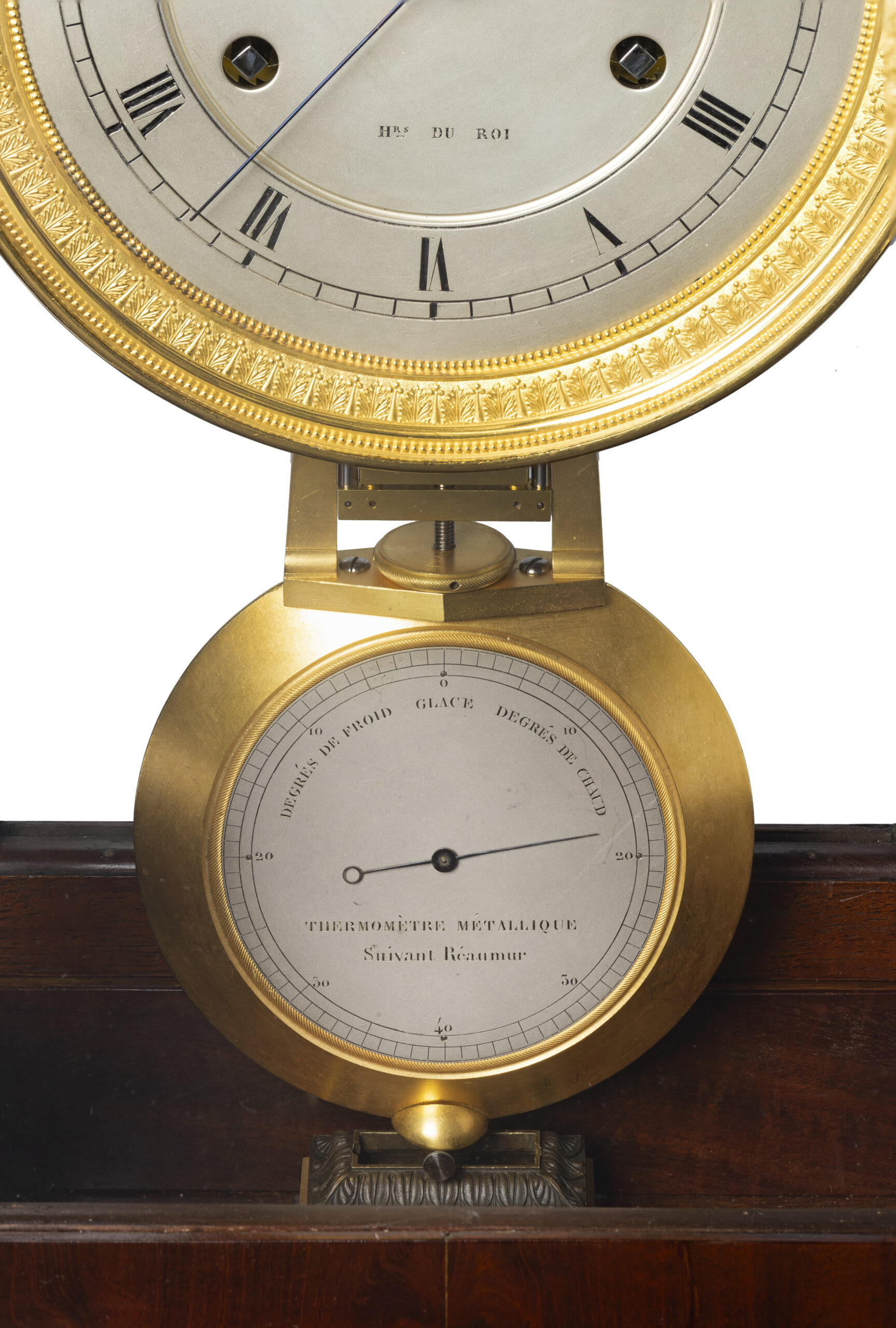
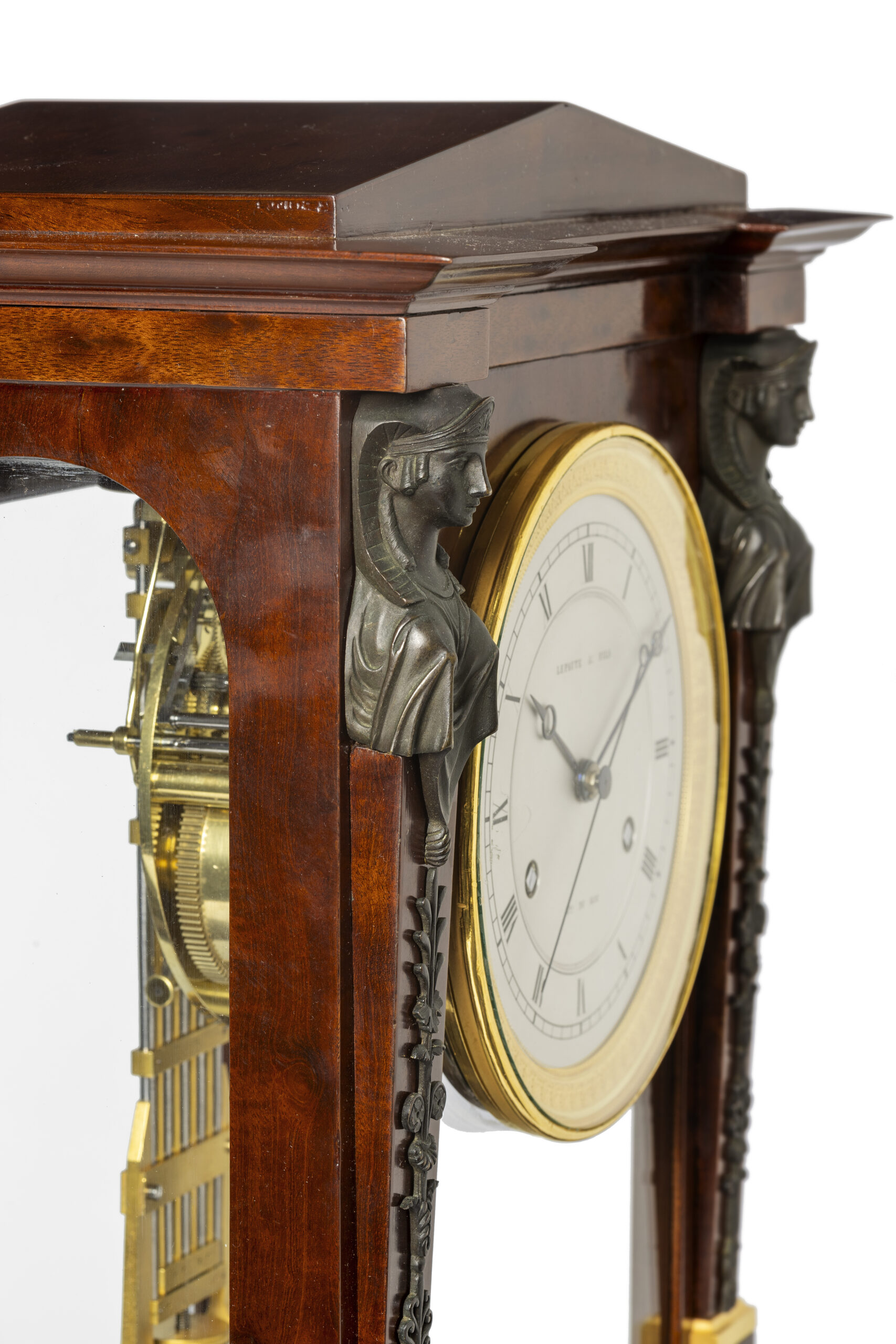
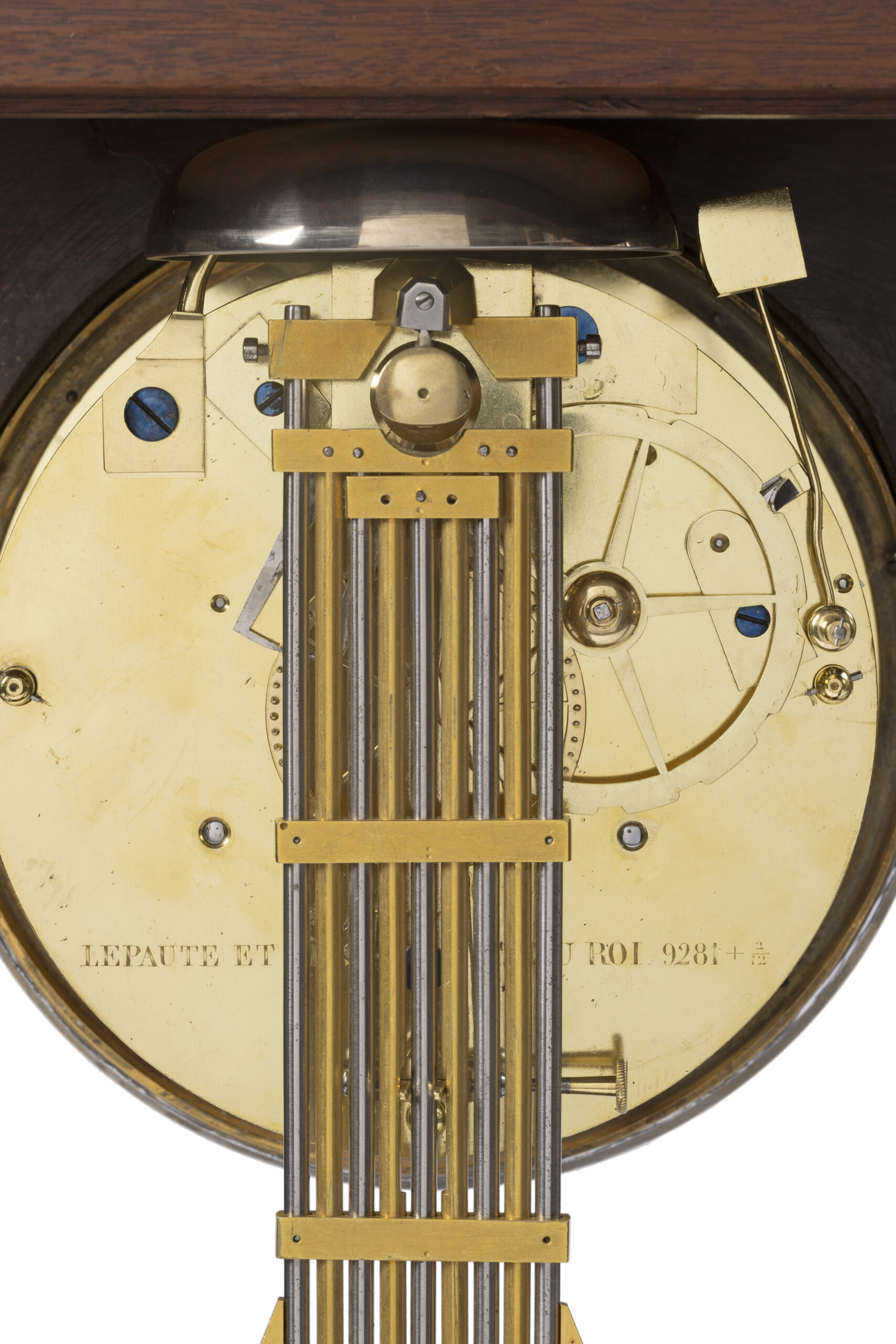
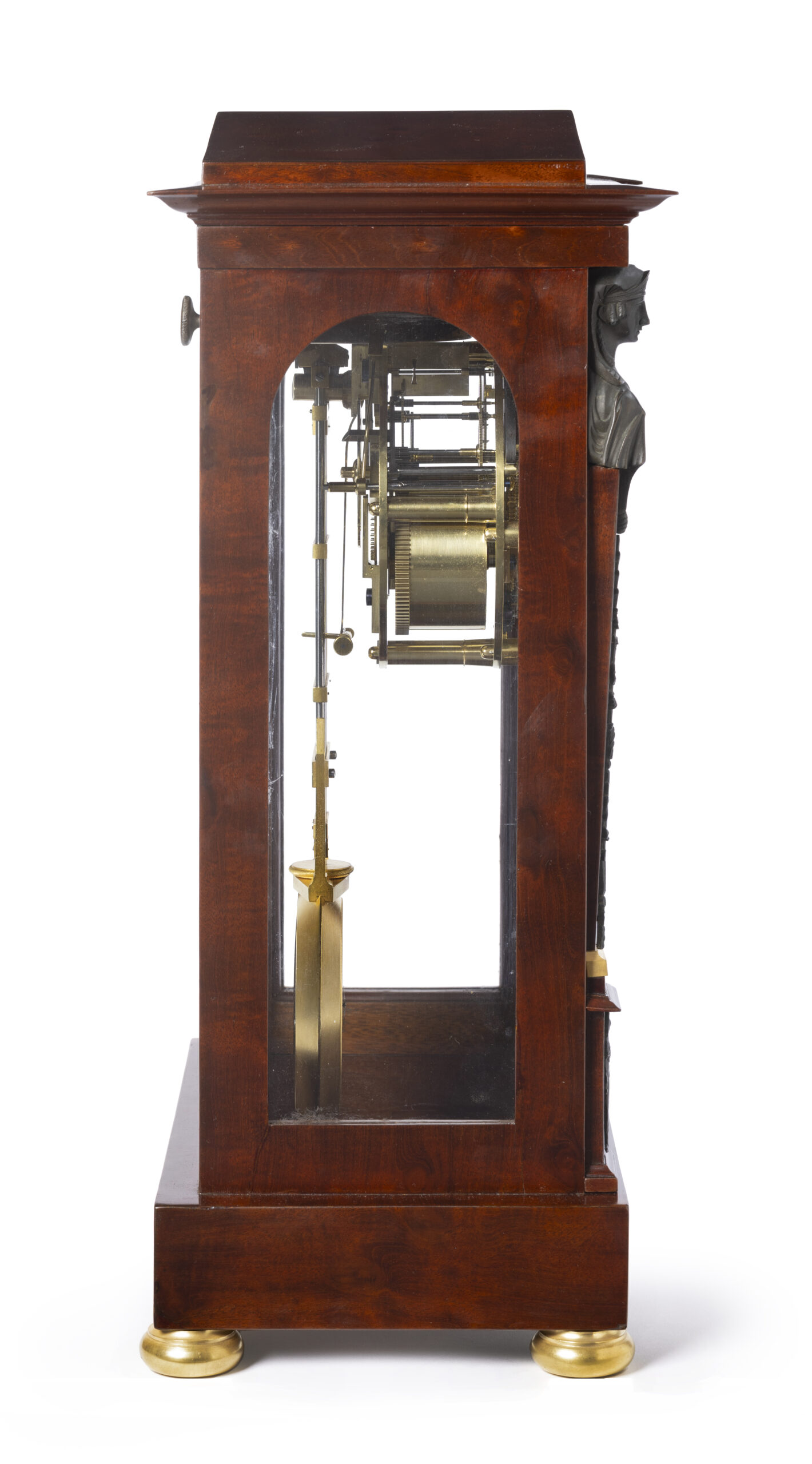
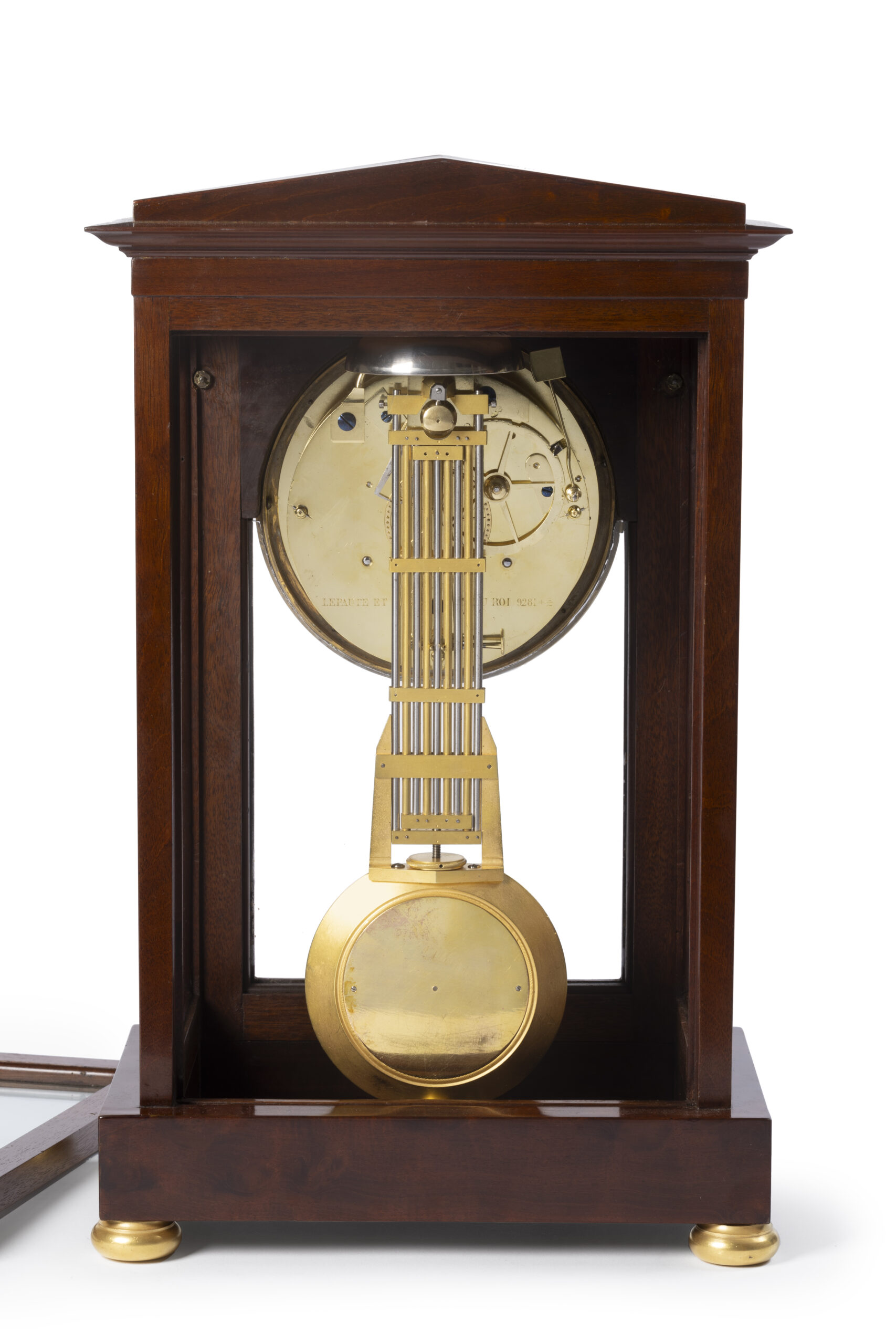
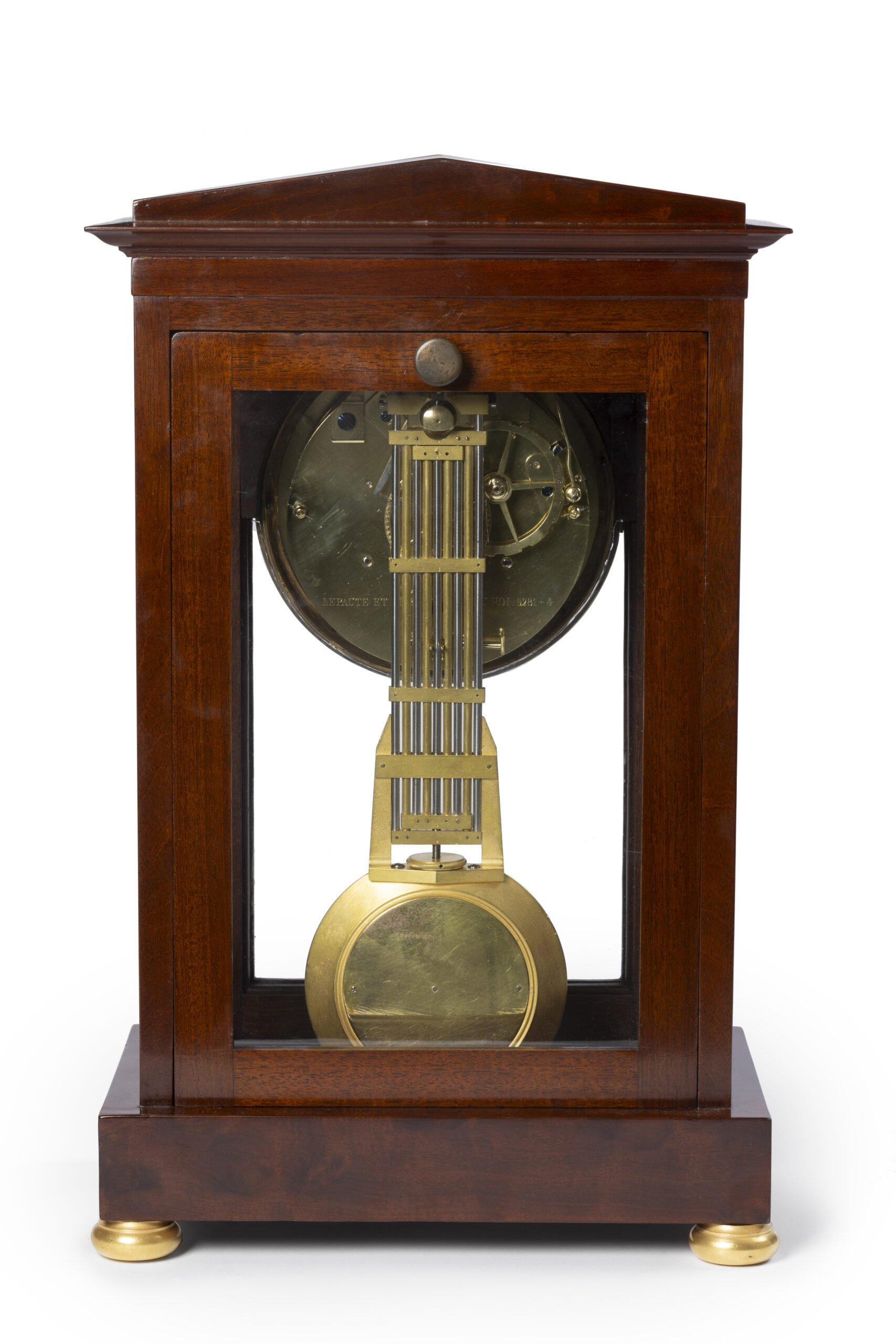
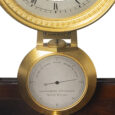
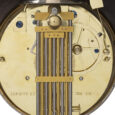
The spring-driven brass movement consists of going and striking trains. The going train has a pinwheel escapement with centre seconds and a compensation pendulum with a knife suspension in a ruby bowl. An U-shaped bimetallic thermometer is incorporated in the pendulum bob. The striking train, controlled by a count wheel, indicates the hours in full and the half hours with one stroke on a bell. The backplate is signed, numbered and dated Hger du Roi 9281 + 2/12.
Dial
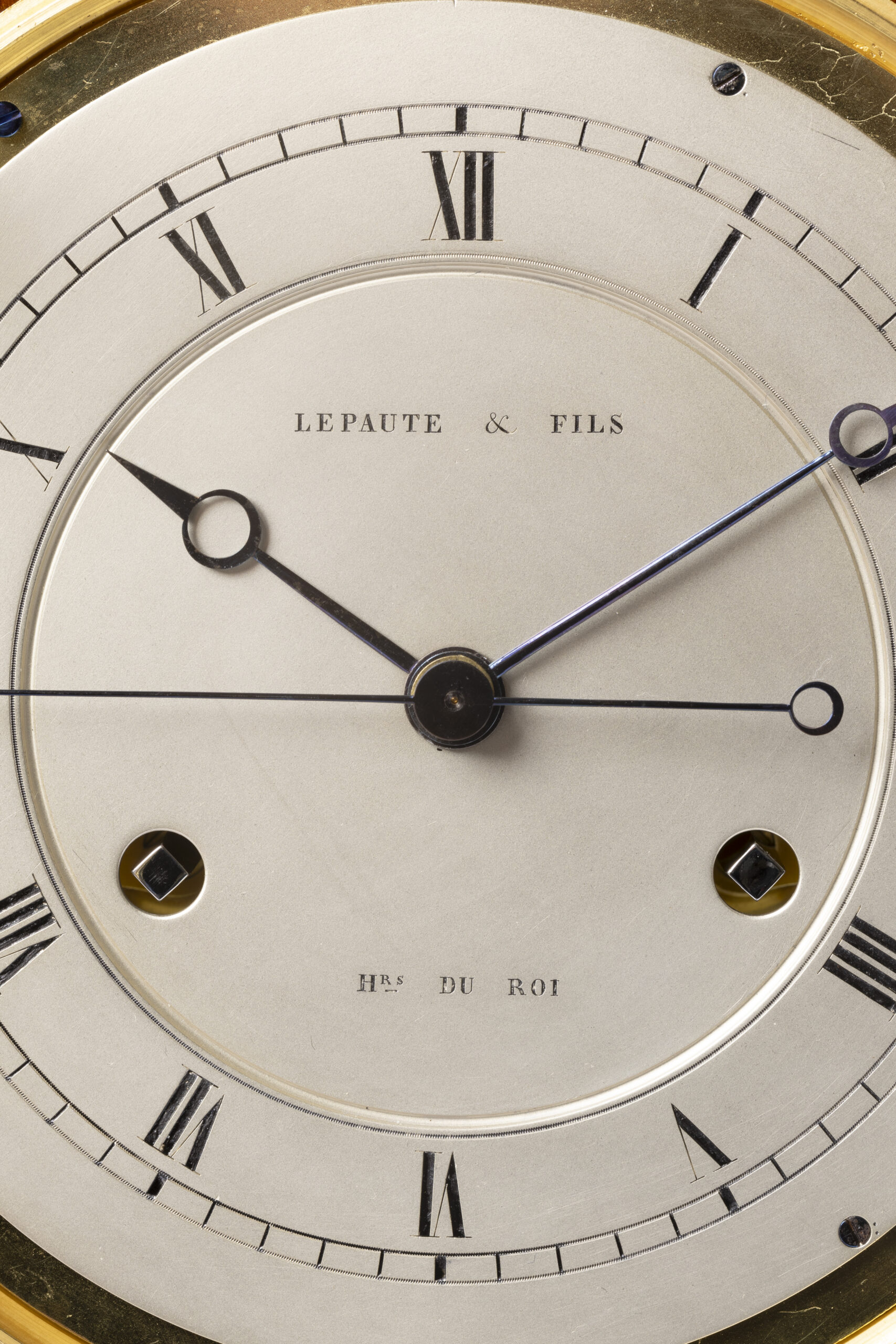
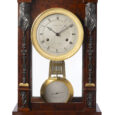
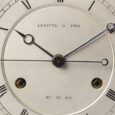
The circular, silvered dial has a black chapter ring, which is divided into Roman hour numerals, five-minute and minute markers in a ring. The winding holes are located in the centre near the IIII and VIII. The dial is signed by the maker as follows: LE PAUTE & FILS, HGER DU ROI. The time is indicated by two blued steel Breguet hands. In addition, there is a central counterbalanced blued steel seconds hand. The dial is protected by a convex glass set in an engine-turned fire-gilt brass bezel.
Case
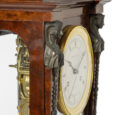
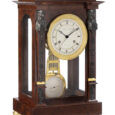
The mahogany-veneered and glazed case is beautifully decorated with patinated bronze statues, depicting sphinxes and allegorical images referring to the ‘retour d`Egypt’. The base of the austere case has, like the frieze, mouldings and is surmounted by a tympanum. The case rests on four gilt brass bun feet.
Duration: one month.
Height: 43 cm.
Width: 29 cm.
Depth: 18 cm.
The maker
The movement was produced by the distinguished house of Lepaute, under the direction of Pierre-Basile Lepaute, known as Sully-Lepaute (1750–1843). He was one of the most important Parisian clockmakers of the late 18th and early 19th centuries. In the mid 1760’s he went to work with his uncles, who were also clockmakers, and began his training in the family workshop. In the early days he was in partnership with his uncle and cousin, in 1789 becoming sole owner of the workshop. Toward the end of the 18th century, he and his nephew Jean-Joseph Lepaute founded a new company that was active until 1811 and won a silver medal at the 1806 Exposition des Produits de l’Industrie. In 1811, his nephew opened his own workshop, while Pierre-Basile and his son Pierre-Michel (1785-1849) founded a new firm called “Lepaute et fils”. For several decades they were the principal suppliers of clocks to the Imperial and Royal Garde-Meuble; they were named, successively, Horloger de l’Empereur and Horloger du Roi.